Sub-Total: $0.00 USD

Precision Lead Discovery and Optimization Services
INDIGO Biosciences offers pre-clinical non-GLP Lead Discovery and Lead Optimization services to help researchers confirm the potency and efficacy of their compounds. Whether you're investigating compounds that target nuclear receptors, GPCRs, growth factors, or signaling pathways, we provide the expertise to support your discovery and development needs.
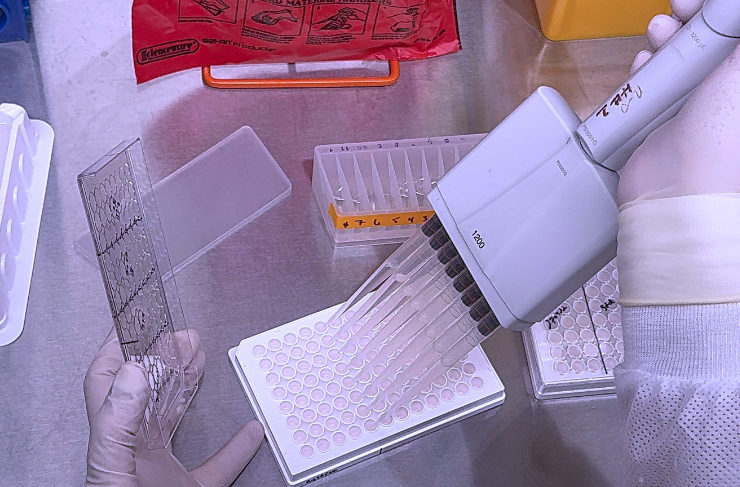




Obtain Clear & Extensive Data Quickly for Your Lead Discovery and Lead Optimization Efforts from Our Expert Scientists

Dedicated Technical Support Team
Our team of experts guides you through the Hit-to-Lead and Lead Optimization processes, leveraging years of experience in receptor biology.

A Comprehensive Portfolio to Find Your Answers
We offer a wide range of assays to meet your specific research needs. From basic assessment to complex pathway analysis, we provide flexible service options.

Quick & Reliable Results on Your Terms
Thanks to our high-quality and cost-effective lead optimization services, we always find the answer you need within your budget and timeline.
Get Started in Three Simple Steps
Design your next study rapidly and confidently with our expert team.

Step 1: Choose Your Target
Select your target receptor, pathway, or protein.

Step 2: Submit Your Project Needs
Fill out a Request a Quote form and tell us more about your study and objectives.

Step 3: Send Your Samples and Get Your Results
Provide your samples or compounds, and we will do the rest.
Receive a complete data package and clear study reports in record time!
Citations

Alfaxalone is a fast acting intravenous anaesthetic with high therapeutic index. It is an analogue of the naturally-occurring neurosteroid allopregnanolone responsible for maintenance of cognition and neuroprotection by activation of brain pregnane X receptors and consequent increased production of mature brain-derived neurotrophic factor (m-BDNF). Two studies are reported here: an in vitro study investigated whether alfaxalone activates human pregnane X receptors (h-PXR) as effectively as allopregnanolone; and a clinical study that measured postoperative changes in serum m-BDNF and cognition in patients after alfaxalone anaesthesia compared with propofol and sevoflurane.
Tris(1,3-dichloro-2-propyl) phosphate (TDCPP) is an organophosphate flame retardant. The primary TDCPP metabolite, bis(1,3-dichloro-2-propyl) phosphate (BDCPP), is detectable in the urine of over 90 % of Americans. Epidemiological studies show sex-specific associations between urinary BDCPP levels and metabolic syndrome, which is an established risk factor for type 2 diabetes, heart disease, and stroke. We used a mouse model to determine whether TDCPP exposure disrupts glucose homeostasis. Six-week old male and female C57BL/6J mice were given ad libitum access to diets containing vehicle (0.1 % DMSO) and TDCPP resulting in the following treatment groups: 0 mg/kg/day, 0.02 mg/kg/day, 1 mg/kg/day, or 100 mg/kg/day. After being on the experimental diet for five weeks without interruption, body composition was analyzed, glucose and insulin tolerance tests were performed, and fasting glucose and insulin levels were quantified. TDCPP at 100 mg/kg/day caused male sex-specific adiposity, fasting hyperglycemia, and insulin resistance. TDCPP-induced modulation of nuclear receptor activation was investigated using an in vitro screen to identify potential mechanisms of metabolic disruption. TDCPP activated farnesoid X receptor (FXR) and pregnane X receptor (PXR), and inhibited the androgen receptor (AR). PXR target genes, but not FXR target genes, were upregulated in livers from mice exposed to 100 mg TDCPP/kg/day. Interestingly, PXR target genes were differentially expressed in livers from both males and females. It remains to be determined whether TDCPP-induced metabolic disruption occurs via modulation of nuclear receptor activity. Taken together, these studies build upon the association of TDCPP exposure and metabolic syndrome in humans by identifying sex-specific effects of TDCPP on glucose homeostasis in mice.
Regeneration of myelin is mediated by oligodendrocyte progenitor cells (OPCs), an abundant stem cell population in the CNS and the principal source of new myelinating oligodendrocytes. Loss of myelin-producing oligodendrocytes in the central nervous system (CNS) underlies a number of neurological diseases, including multiple sclerosis (MS) and diverse genetic diseases1–3. Using high throughput chemical screening approaches, we and others have identified small molecules that stimulate oligodendrocyte formation from OPCs and functionally enhance remyelination in vivo4–10. Here we show a broad range of these pro-myelinating small molecules function not through their canonical targets but by directly inhibiting CYP51 (cytochrome P450, family 51), TM7SF2, or EBP (emopamil binding protein), a narrow range of enzymes within the cholesterol biosynthesis pathway. Subsequent accumulation of the 8,9-unsaturated sterol substrates of these enzymes is a key mechanistic node that promotes oligodendrocyte formation, as 8,9-unsaturated sterols are effective when supplied to OPCs in purified form while analogous sterols lacking this structural feature have no effect. Collectively, our results define a unifying sterol-based mechanism-of-action for most known small-molecule enhancers of oligodendrocyte formation and highlight specific targets to propel the development of optimal remyelinating therapeutics.
See What Our Customers Have to Say