Sub-Total: $0.00 USD

Have questions about this assay kit?
Human FGFR4/β-Klotho Reporter Assay Kit
Product Description and Product Data
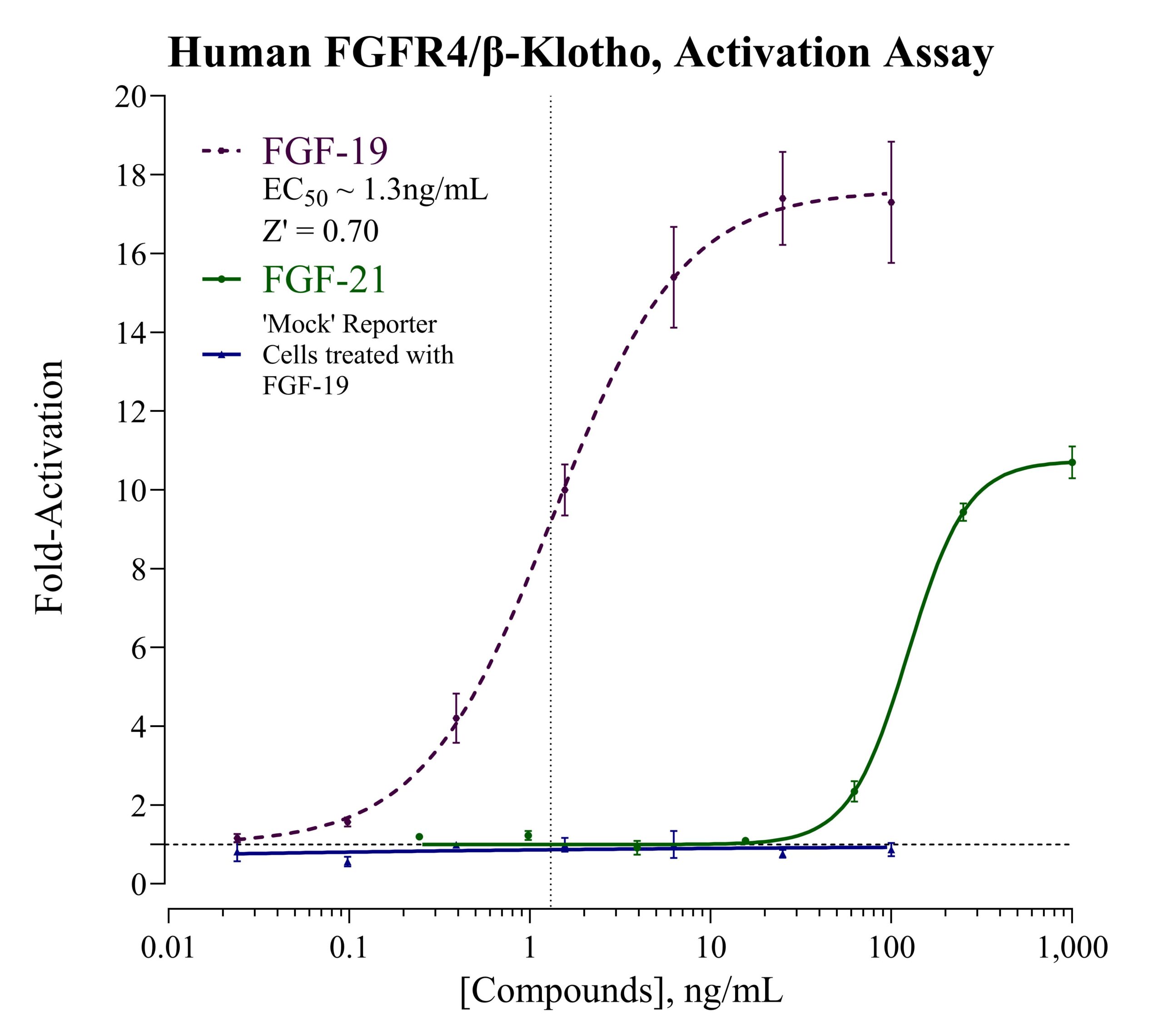
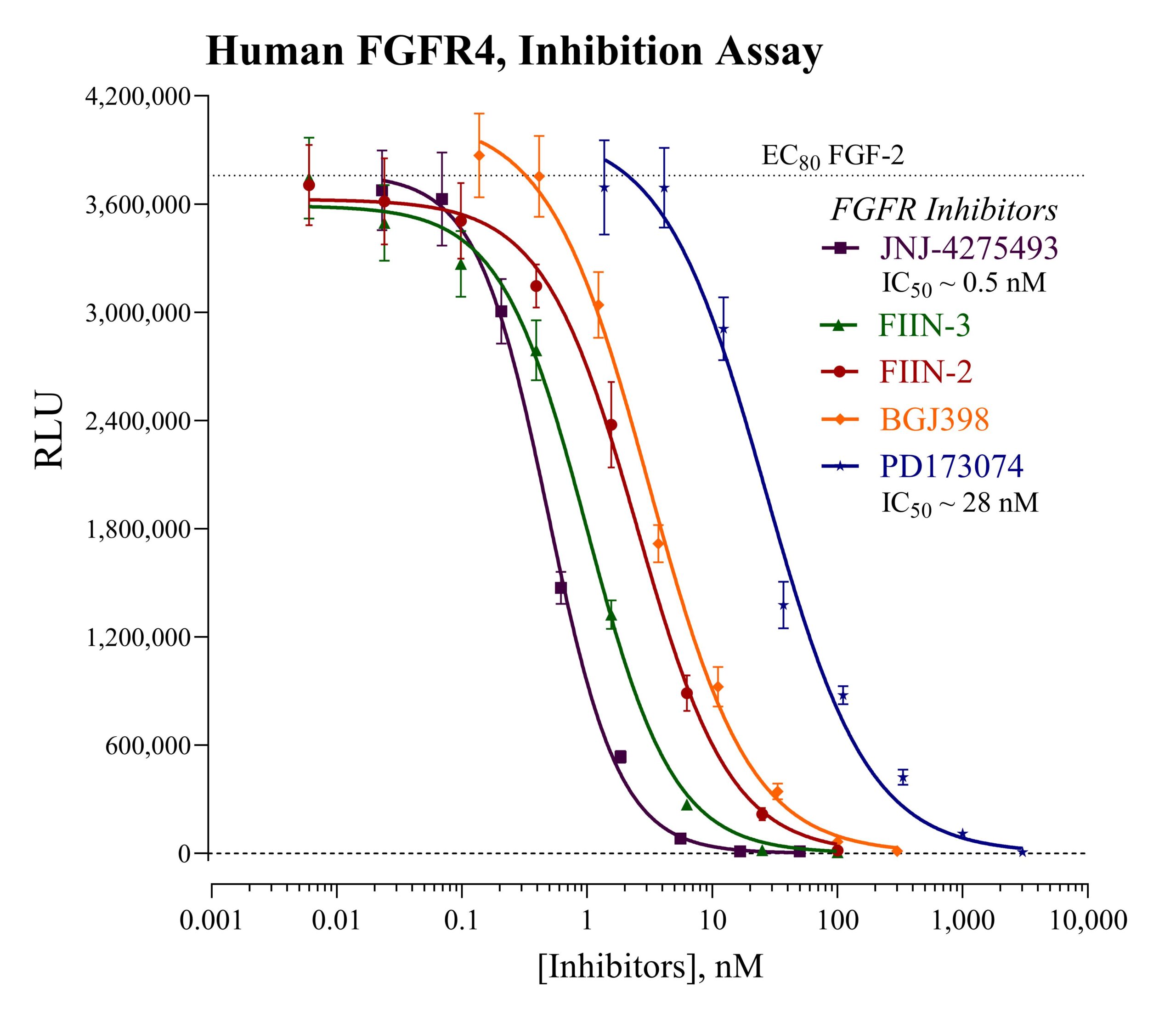
This is an all-inclusive cell-based luciferase reporter assay kit targeting the Human Fibroblast Growth Factor Receptor 4 and β-Klotho (FGFR4/β-Klotho). INDIGO’s FGFR4/β-Klotho reporter assay utilizes proprietary mammalian cells that have been engineered to provide constitutive expression of the Human Fibroblast Growth Factor Receptor 4 and β-Klotho. In addition to FGFR4/β-Klotho Reporter Cells, this kit provides two optimized media for use during cell culture and in diluting the user’s test samples, a reference agonist, Luciferase Detection Reagent, and a cell culture-ready assay plate. The principal application of this assay is in the screening of test samples to quantify any functional activity, either agonist or antagonist, that they may exert against human FGFR4/β-Klotho. This kit provides researchers with clear, reproducible results, exceptional cell viability post-thaw, and consistent results lot to lot. Kits must be stored at -80C. Do not store in liquid nitrogen. Note: reporter cells cannot be refrozen or maintained in extended culture.
Features
Ready to Use Upon Receipt
- Includes All Needed Components
- Contains Transfected Reporter Cells
- Eliminates Cell Licensing Fees
- Clear, Reproducible Results
- Consistent Results Lot to Lot
Product Specifications
| Target Type | Growth Factor Receptor | ||
| Species | Human | ||
| Receptor Form | Hybrid | ||
| Assay Mode | Agonist, Antagonist | ||
| Kit Components |
| ||
| Shelf Life | 6 months | ||
| Shipping Requirements | Dry Ice | ||
| Storage temperature | -80C |
Data

Target Background
The family of Fibroblast Growth Factors (FGFs) comprise approximately 23 members that are related by core sequence and structure conservation, with the majority of FGFs being secreted signaling proteins. Secreted FGFs are predominantly autocrine and paracrine factors, with only three members evolved to function as endocrine factors1. FGFs bind and activate FGF Receptors (FGFRs) which, themselves, are members of the family of high-affinity tyrosine kinase receptors.
Paracrine FGFs show high affinity towards the extracellular matrix (ECM) component heparin sulfate (HS) and are thus retained in the ECM and function locally. In contrast, the atypical endocrine subfamily of FGFs, that comprise FGF-19, FGF-21, and FGF-23, have reduced affinity for HS and can therefore escape from the ECM into the circulation to reach target distant organs. However, this subfamily typically requires association with members of the Klotho family of proteins as cofactors for efficient binding to their cognate receptor(s).
Aberrant FGF-19 signaling mediated by its receptor, FGFR4 and co-receptor β-Klotho, is known to be a driver of hepatocellular carcinoma (HCC). Consequently, FGF-19 and FGFR4/β-Klotho command considerable interest as therapeutic targets in drug development and drug safety screening.
Product Documentation

Citations
Also available as a service