Sub-Total: $0.00 USD
Bioanalytical Screening Tools for Water Reuse Projects
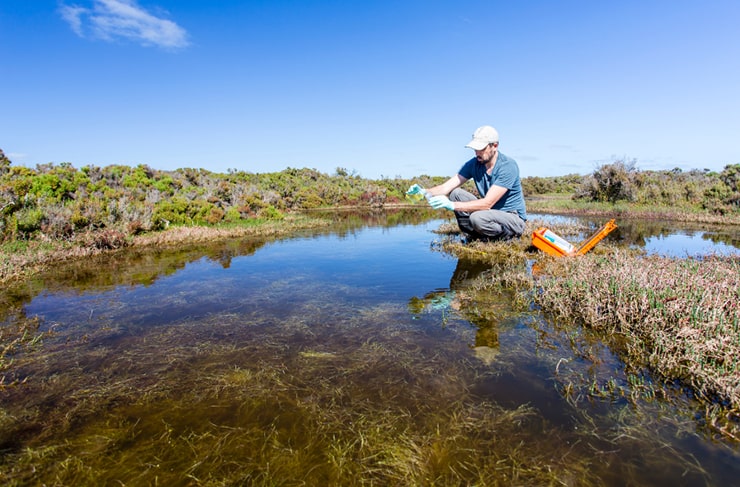
As a recycled water producer, you know the importance of actively safeguarding your water resources. INDIGO Biosciences’ bioassays allow you to add another tool to your water quality program to monitor for unregulated contaminants and constituents of emerging concern in a variety of recycled water applications.

What are Bioassays?
Bioassays, also known as Reporter Gene Assays, are bioanalytical screening tools that can indicate whether there are non-targeted contaminants present in a water sample. They do so by looking at molecular events, more specifically the activation or inhibition of nuclear hormone receptors. If a contaminant does affect these receptors, it can lead to changes in cellular events and ultimately to changes in tissue events such as impacts on reproduction, metabolism, and cell proliferation (cancer). The two nuclear receptors most commonly evaluated in water reuse applications are the Aryl Hydrocarbon Receptor (AhR) and the Estrogen Receptor (ER). However, other nuclear receptors may also be affected by environmental contaminants including the Androgen Receptor (AR), the Glucocorticoid Receptor (GR), the Mineralocorticoid Receptor (MR), and the Peroxisome Proliferator-Activated Receptor Alpha (PPARα).
Why Use Bioassays to Evaluate Water Quality?
Bioassays are sensitive tests that can identify the presence of contaminants including endocrine-disrupting chemicals, pharmaceuticals, personal care products, industrial compounds, and more, even at low concentrations and in the complex mixtures found in wastewater. Bioassays can detect the effects of targeted, non-targeted, and even unknown contaminants, providing a comprehensive assessment of water quality and highlighting the presence of potential risks before they become significant hazards. Utilizing bioassays as another pillar of water quality monitoring ensures that water intended for reuse is thoroughly evaluated and safe, protecting both human health and the environment.

Bioassays for Monitoring Constituents of Emerging Concern
Cell-based reporter assays are a well-established technology that can detect biological effects caused by CECs, identify effects from non-targeted CECs, and measure the additive effects of complex mixtures of CECs. This makes them useful tools to evaluate source water quality, assess the effectiveness of various treatment processes, and conduct routine monitoring to ensure the removal of CECs during treatment.
INDIGO’s bioassays provide rapid and reliable detection of potential toxicity from a wide range of contaminants, allowing you to ensure the quality of your water during:
- Source Water Evaluation
- Pilot Project Design
- Process Control & Optimization
- Routine Monitoring of Final Treated Effluent
Utilize INDIGO’s bioassays to identify the presence of Constituents of Emerging Concern (CECs) including pharmaceuticals, personal care products, industrial chemicals, and pesticides. Together, we can pave the way for a cleaner, safer future through effective water reuse practices.
Bioassays vs. Traditional Analytical Chemistry
Bioassays differ significantly from traditional analytical chemistry tests in that they are “effect-based”. This means they provide information on the biological activity caused by contaminants in a water sample. This contrasts with analytical chemistry tests that look at the concentration of a particular analyte of interest. However, real world exposure generally occurs as mixtures of different chemical compounds. This presents risks to humans and the environment from:
- chemicals without toxicity information
- the presence and concentrations of other compounds
- chemicals that work together to increase toxic potential
To understand the risk posed by complex samples, cell-based assays are needed to characterize cumulative effects of multiple contaminants on humans and other organisms.

Interpreting Data from Reporter Gene Assays
When performing a bioassay, you analyze a water sample along with a standard reference compound. Results of the bioassay allow you to calculate a Bioanalytical Equivalent Concentration for the water sample. This is the concentration of contaminants in your water sample expressed in relation to the reference compound. For example, when running an Estrogen Receptor (ER) assay, you will express your results in Bioanalytical Equivalent Concentrations of E2 (17β-Estradiol), the reference compound for the ER assay. Finally, you compare your results to established reporting limits set by your respective water regulatory body to determine what, if any, action is recommended or required.
Where are Bioassays Being Used?
The State of California’s “Water Quality Control Policy for Recycled Water” currently requires the use of bioassays for monitoring water quality in the production and use of recycled water for groundwater recharge and reservoir water augmentation. INDIGO has received approval from the California Water Boards for the use of its Aryl Hydrocarbon Receptor (AhR) and Estrogen Receptor Alpha (ERα) bioassays as bioanalytical screening tools for Constituents of Emerging Concern in recycled water.

Our Lab or Yours?
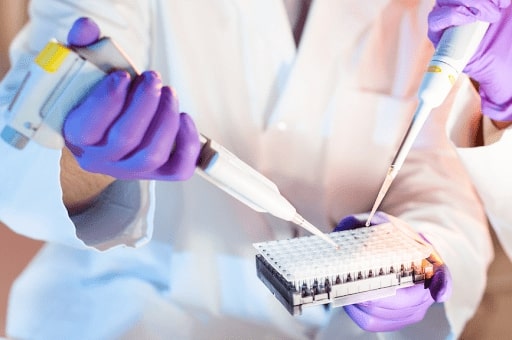
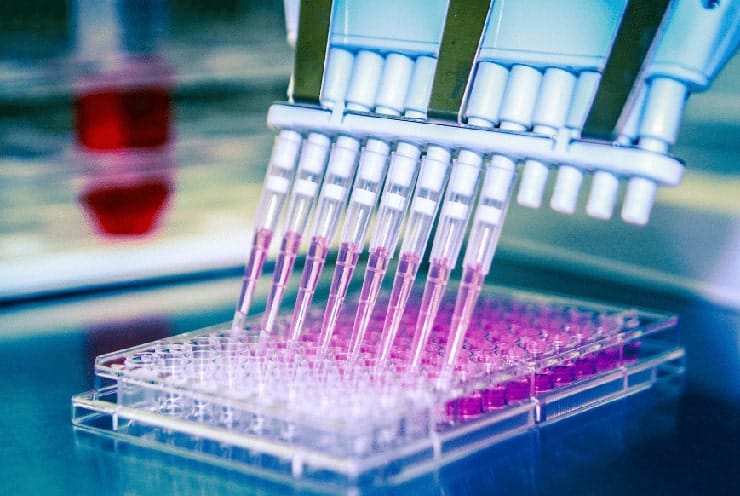
While the process for running a bioassay is fairly simple, it does require some specialized lab techniques and laboratory equipment. For example, the accuracy and precision of a bioassay is directly related to lab practice, so users should be familiar with aseptic techniques and basic cell culture and should be confident in their use of multi-channel pipettes. In addition, a suitably equipped lab should include a biosafety hood, an incubator, and a luminometer.
For labs with suitable experience and the necessary equipment, INDIGO offers “ready-to-use” assays that include everything needed to run a bioassay. For labs without the required expertise, equipment, or capacity, INDIGO can perform these bioassays in its own lab as a service to water utilities, environmental consultants, analytical laboratories, etc.