Sub-Total: $0.00 USD

Have questions about this assay kit?
Human 5-HT2A Reporter Assay Kit
Product Description and Product Data
This is an all-inclusive cell-based luciferase reporter assay kit targeting the the Human 5-Hydroxytryptamine Receptor 2A Reporter Assay System (5-HT2A; HTR2A). INDIGO’s 5-HT2A reporter assay utilizes proprietary mammalian cells that have been engineered to provide constitutive expression of the 5-HT2A. In addition to 5-HT2A Reporter Cells, this kit provides two optimized media for use during cell culture and in diluting the user’s test samples, a reference agonist, Luciferase Detection Reagent, and a cell culture-ready assay plate. The principal application of this assay is in the screening of test samples to quantify any functional activity, either agonist or antagonist, that they may exert against 5-HT2A. This kit provides researchers with clear, reproducible results, exceptional cell viability post-thaw, and consistent results lot to lot. Kits must be stored at -80C. Do not store in liquid nitrogen. Note: reporter cells cannot be refrozen or maintained in extended culture.
Features
Clear, Reproducible Results
- All-Inclusive Assay Systems
- Exceptional Cell Viability Post-Thaw
- Consistent Results Lot to Lot
Product Specifications
| Target Type | GPCR | ||
| Species | Human | ||
| Kit Components |
| ||
| Shelf Life | 6 months | ||
| Shipping Requirements | Dry Ice | ||
| Storage temperature | -80C |
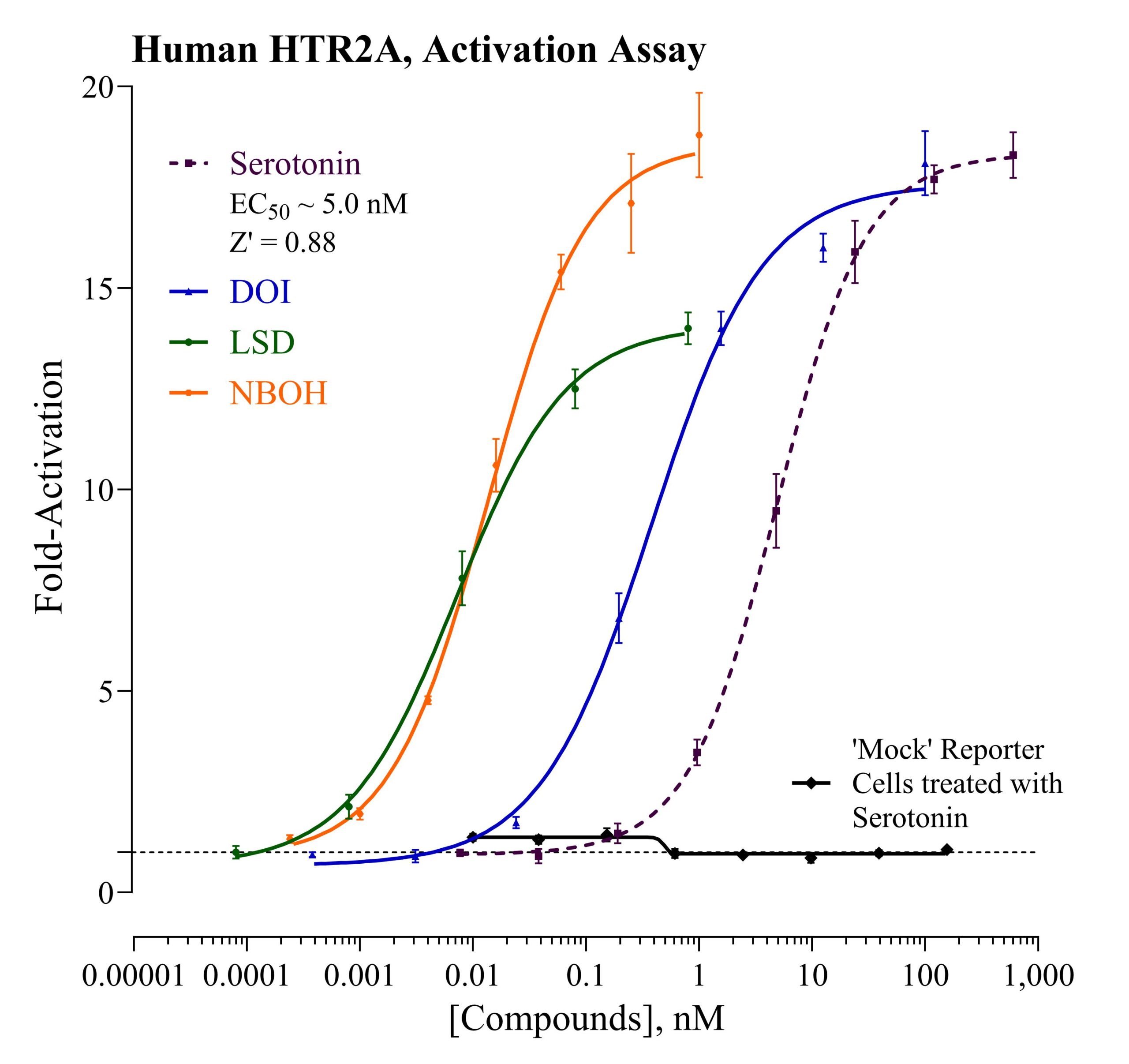
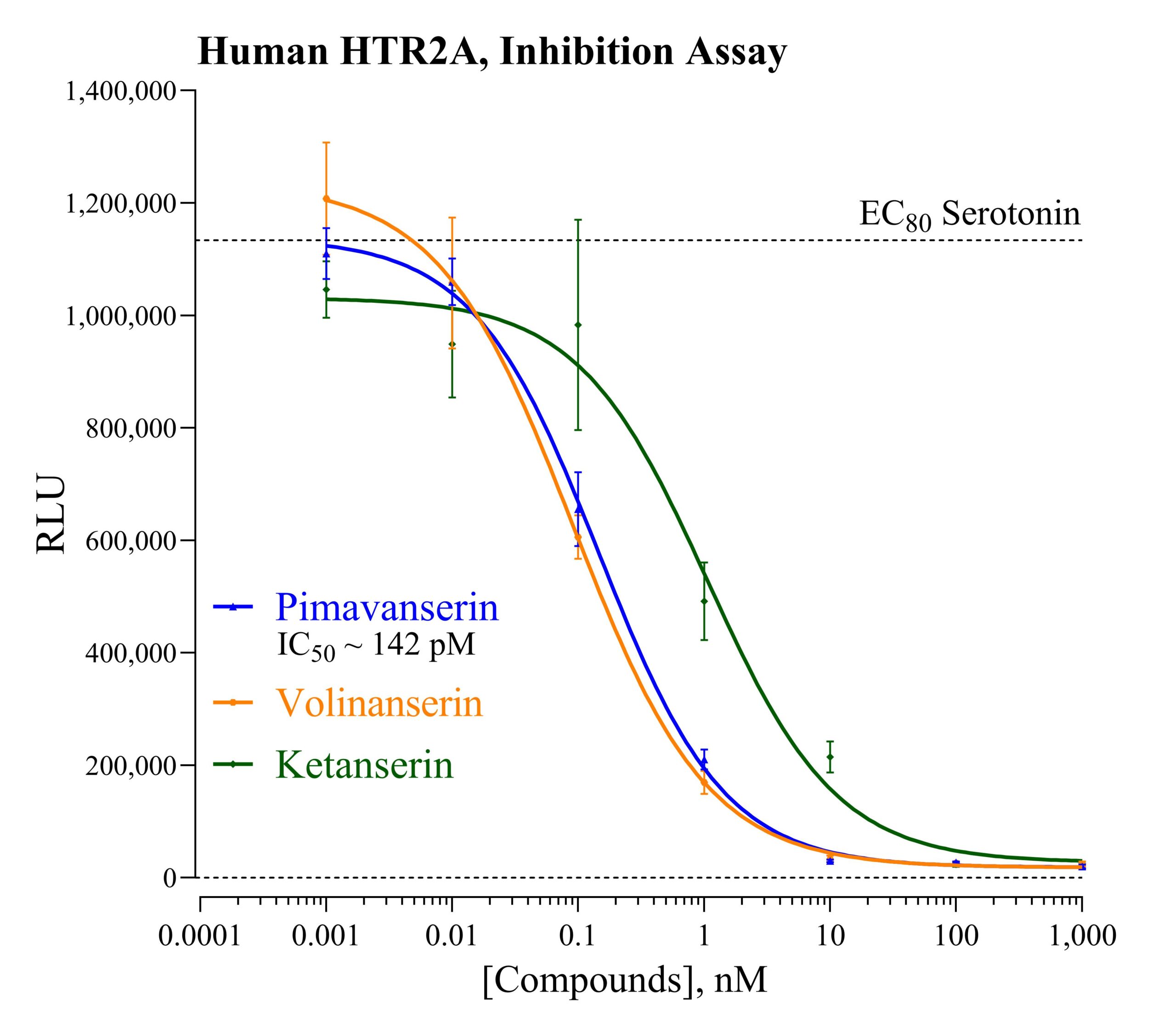
Data
Target Background
Serotonin (5-hydroxytryptamine, 5-HT) receptors comprise seven receptor families (5-HT1 to 5-HT7) and 14 receptor subtypes in humans. With the exception of the 5-HT3 receptor, which is a ligand-gated ion channel, serotonin receptors are G-protein-coupled receptors (GPCRs), with the majority belonging to the class A family. Serotonin receptors are widely expressed throughout the central and peripheral nervous systems and are involved in diverse physiological processes, including cognition, mood, sensory perception, nociception, gastrointestinal function, cardiovascular regulation and sleep. Their broad tissue distribution and functional diversity make them important targets in drug discovery and pharmacological research.
Beyond primary drug discovery, serotonin receptors are also important in secondary pharmacology and safety assessment, where unintended interactions may identify potential off-target liabilities associated with central nervous system, cardiovascular, gastrointestinal, and other adverse pharmacological effects.
Among the serotonin receptors, 5-hydroxytryptomine receptor 2A (HTR2A, a.k.a. 5-HT2A) is an important target in CNS pharmacology and drug discovery. 5-HT2A is primarily coupled to Gq/11 signaling pathway, leading to phospholipase C activation, intracellular calcium mobilization, and downstream transcriptional responses2. The receptor is highly expressed in the cerebral cortex and contributes to the regulation of cognition, perception, mood, and other CNS functions. 5-HT2A is targeted by diverse pharmacological agents, including psychedelic compounds that act as receptor agonists and atypical antipsychotics that exhibit antagonist or inverse agonist activity. Accordingly, 5-HT2A functional assays are useful for characterizing both on-target and off-target serotonergic activity and for evaluating compound potency, efficacy, and functional pharmacology.

Citations
Also available as a service