Sub-Total: $0.00 USD

Have questions about this assay kit?
Human CTR Reporter Assay Kit
Product Description and Product Data
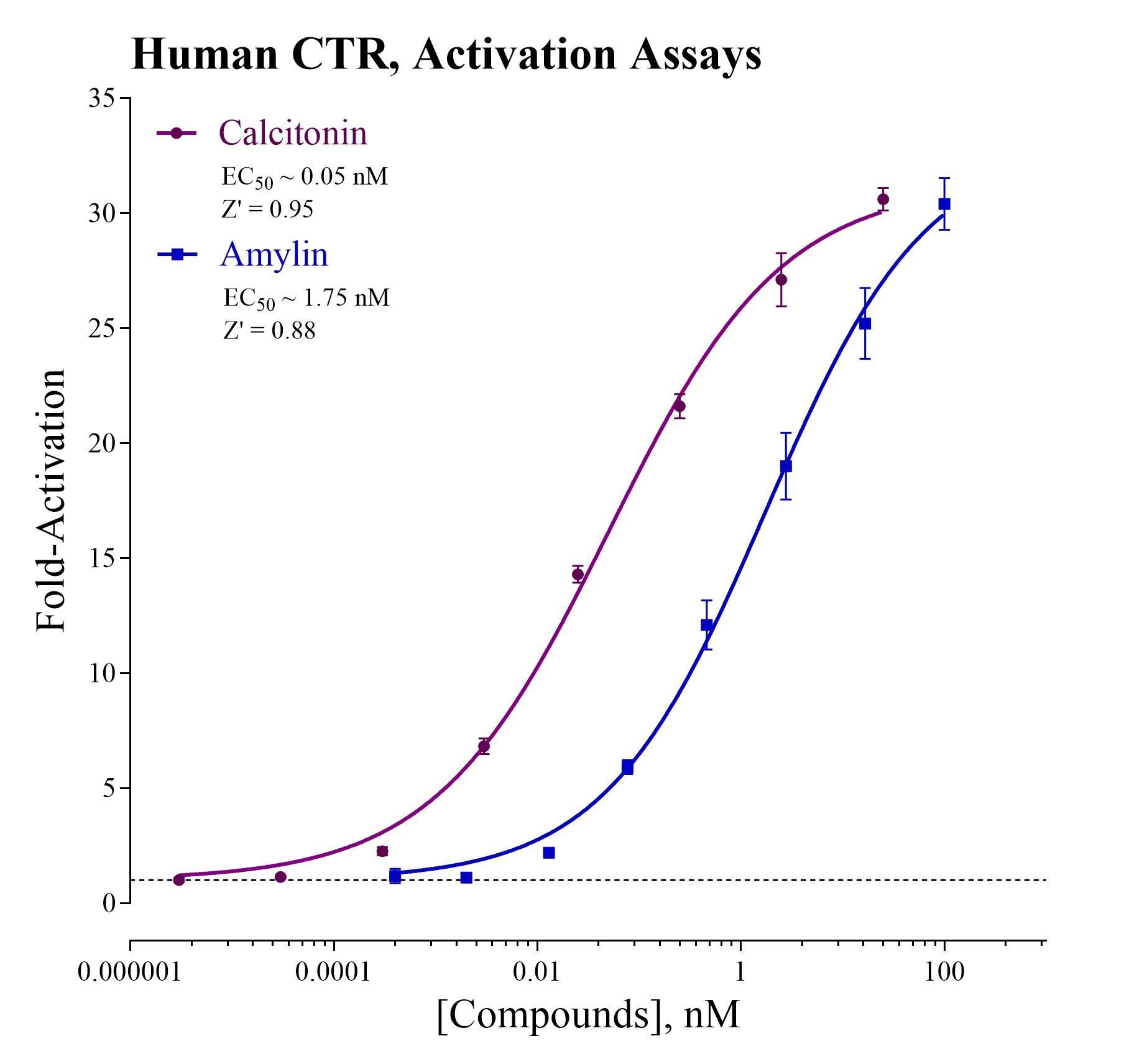
This is an all-inclusive cell-based luciferase reporter assay kit targeting the the Human Calcitonin Receptor Reporter Assay System (CTR). INDIGO’s CTR reporter assay utilizes proprietary mammalian cells that have been engineered to provide constitutive expression of the CTR. In addition to CTR Reporter Cells, this kit provides two optimized media for use during cell culture and in diluting the user’s test samples, a reference agonist, Luciferase Detection Reagent, and a cell culture-ready assay plate. The principal application of this assay is in the screening of test samples to quantify any functional activity, either agonist or antagonist, that they may exert against CTR. This kit provides researchers with clear, reproducible results, exceptional cell viability post-thaw, and consistent results lot to lot. Kits must be stored at -80C. Do not store in liquid nitrogen. Note: reporter cells cannot be refrozen or maintained in extended culture.
Features
Clear, Reproducible Results
- All-Inclusive Assay Systems
- Exceptional Cell Viability Post-Thaw
- Consistent Results Lot to Lot
Product Specifications
| Target Type | GPCR | ||
| Species | Human | ||
| Kit Components |
| ||
| Shelf Life | 6 months | ||
| Shipping Requirements | Dry Ice | ||
| Storage temperature | -80C |
Data
Target Background
This assay utilizes proprietary human cells that provide constitutive expression of the human Calcitonin Receptor (CTR).
The Calcitonin Receptor (CTR) is a Class B G-protein coupled receptor (GPCR) activated by the peptide hormone calcitonin. CTR also serves as the core component of the Amylin receptors (AMY1-3R), which are formed by the heterodimerization of CTR with one of the three Receptor Activity Modifying Proteins (RAMP1-3). The binding of Calcitonin to CTR stimulates G-Protein Gαs, which activates adenylate cyclase (AC), leading to an increase in cellular cAMP.
CTR is an important drug target due to its roles in regulating bone and energy homeostasis. The receptor is highly expressed on the surface of osteoclasts, where its activation inhibits bone resorption. CTR is also expressed in regions of the brain, such as the hypothalamus, where it contributes to the regulation of food intake and pain perception.
Given these roles, CTR has been exploited in multiple therapeutic approaches. Calcitonin analogs are used to treat bone disorders such as osteoporosis and Paget’s disease. Importantly, the development of Dual Amylin and Calcitonin Receptor Agonists (DACRAs) is currently at the forefront of pharmaceutical strategies aimed at providing more effective and sustainable metabolic control for patients with obesity and Type 2 Diabetes. DACRAs have been shown to suppress appetite, delay gastric emptying, and reduce fat accumulation in organs such as the liver.

Citations
Also available as a service