Sub-Total: $0.00 USD

Reporter Assays for Biologics: Moving from Binding to Functional Characterization
Biologics have transformed drug discovery by enabling researchers to target disease biology with a level of specificity that is often difficult to achieve with traditional small molecules. Monoclonal antibodies, therapeutic proteins, peptides, and other biologic modalities can selectively engage receptors, ligands, and cell-signaling mechanisms involved in disease. However, their complexity can also make functional characterization more challenging.
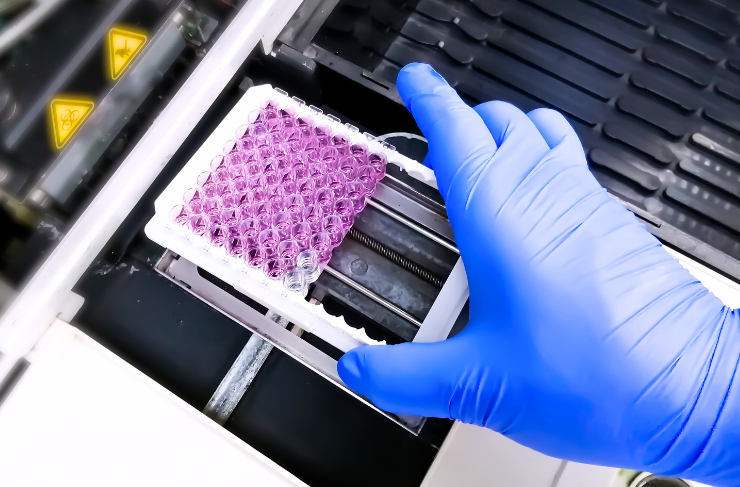
Binding to a target is only part of the pharmacological story. Drug discovery teams also need to understand whether a biologic activates, inhibits, or otherwise changes a measurable cellular response downstream of that target. Reporter assays for biologics provide a cell-based approach for measuring these functional effects and generating quantitative data that can support candidate selection, potency assessment, and mechanism-of-action studies.
Why Biologics Present Unique Mechanism Challenges
Biologics frequently act through interactions occurring at the cell surface or extracellularly. An antibody may block ligand binding, stabilize or disrupt a receptor interaction, activate a receptor, or alter signaling through receptor cross-linking. Other biologics may mimic endogenous ligands or interfere with signaling proteins before they reach their cellular targets. These mechanisms can be difficult to characterize using binding measurements alone.
An affinity assay may demonstrate that an antibody binds strongly to its intended receptor, for example, but strong binding does not necessarily translate into strong functional activity. Two biologics with similar binding affinity may produce substantially different downstream responses because of differences in epitope, receptor conformation, valency, or mechanism.
This creates an important question during candidate characterization: What does the biologic actually do when it engages its target? Functional cell-based assays help answer that question by measuring a defined biological response downstream of target engagement.
How Reporter Assays Evaluate Biologic Activity
Reporter gene assays connect receptor or cellular activity to an easily measured output, commonly luminescence. Cells are engineered so that activation or inhibition of a particular receptor changes expression of a reporter gene. Using this approach allows researchers to quantify the functional response following biologic addition and target engagement. Depending on the target and assay design, a reporter assay for biologics may be used to investigate agonist or antagonist activity, characterize concentration-response relationships, compare relative potency, or evaluate selectivity against related targets.
For an agonistic biologic, increasing concentrations can be tested to determine how effectively the molecule activates the receptor. The resulting concentration-response curve can provide measurements such as EC50 and maximum response. For an antagonist or blocking antibody, the biologic can instead be evaluated for its ability to reduce receptor activation produced by a reference agonist. Researchers can then examine inhibitory potency and the degree of functional inhibition.
These functional measurements provide data biologics teams often need during candidate evaluation: how much biologic is required to produce a response, what is the magnitude of the response, whether the response matches the intended mechanism, and whether similar candidates differ functionally despite comparable binding.
Reporter Assays for Biologics vs Small Molecules
The fundamental principle of a reporter assay is similar whether researchers are studying a biologic or a small molecule, but several practical differences can affect assay design and interpretation. Small molecules often diffuse across membranes and may interact with intracellular targets such as nuclear receptors. Biologics are generally much larger and typically interact with extracellular targets or cell-surface receptors. Their activity may therefore depend more heavily on receptor accessibility, binding orientation, and extracellular assay conditions.
Biologics can also have more complex functional behavior. An antibody designed as a receptor antagonist, for example, may prevent ligand binding without completely eliminating receptor activity. Another antibody targeting the same receptor could potentially alter receptor conformation or produce partial agonist activity.
Concentration ranges may also differ significantly between assay types. Small molecules are frequently evaluated across micromolar or nanomolar ranges, while biologics may require concentration ranges selected according to molecular weight, expected potency, and target biology. Appropriate controls and concentration-response curve analysis are therefore important when comparing candidate performance.
Where Reporter Assays Fit in Biologic Drug Discovery
Functional reporter assays can support several stages of biologic discovery and development. During early candidate screening, researchers can compare multiple antibodies or other biologics based on functional activity rather than binding affinity alone. Candidates that demonstrate the desired activity can then advance into more detailed characterization. During lead optimization, concentration-response testing can help distinguish candidates based on potency and efficacy. These differences may become especially valuable when several molecules show comparable target binding.
Reporter assays can also support selectivity studies. Testing a biologic against related receptors can help determine whether functional activity is restricted to the intended target or whether additional receptor interactions should be investigated. Later in development, well-characterized cell-based assays may also contribute to potency testing by providing a functional measurement related to the biological activity of the therapeutic. The specific assay requirements, however, depend on the molecule, target, development stage, and intended application.
For biologics teams, the value of reporter assays is not simply that they generate another data point. Their value is that they can help connect candidate behavior to functional decisions: which molecules should advance, which mechanisms are confirmed, which candidates show stronger potency or efficacy, and which related targets may require additional evaluation.
Best Practices for Biologics Reporter Assays
A well-designed reporter assay for biologics should reflect both the biology of the target and the mechanism expected from the therapeutic.
First, the functional assay should match the intended mechanism. A blocking antibody should generally be evaluated under antagonist conditions in the presence of an appropriate activating ligand, while an agonistic antibody should be tested for its ability to directly stimulate receptor activity.
Second, use concentration-response testing rather than relying on a single test concentration. A full response curve provides substantially more information about potency, efficacy, partial activity, and differences between candidates.
Third, include appropriate positive, negative, and reference controls. These controls help establish assay performance and provide context for interpreting the biological response.
Researchers should also consider the characteristics of the biologic itself. Molecular size, formulation components, stability, incubation time, and receptor-binding kinetics can influence experimental performance and may require conditions that differ from those traditionally used for small molecules.
Finally, functional data should be interpreted alongside complementary information. Binding measurements establish whether a biologic interacts with its target, while reporter assays demonstrate the signaling consequences of that interaction. Together, these approaches provide a more complete pharmacological profile.
Moving from Binding to Functional Characterization
As biologic drug discovery expands into increasingly complex targets and mechanisms, researchers need tools that reveal more than whether a therapeutic candidate binds. They need to understand how that interaction changes cellular activity.
A reporter assay for biologics can provide quantitative functional data that helps teams distinguish candidates, characterize agonist or antagonist activity, compare potency and efficacy, and investigate selectivity earlier in development.
INDIGO Biosciences offers cell-based reporter assays for a broad range of receptors and signaling targets, giving biologics researchers a streamlined way to add functional pharmacology to their discovery workflows. Whether evaluating monoclonal antibodies, peptides, therapeutic proteins, or other biologic candidates, reporter assays can help connect target engagement with the cellular response that ultimately matters for drug development.
Explore INDIGO’s cell-based reporter assay kits and services to evaluate functional activity, potency, efficacy, and selectivity for receptor-focused biologics programs.