Sub-Total: $0.00 USD

Transient Transfection vs. Stable Transduction for Luciferase Reporter Assays
Cell-based luciferase reporter assays are used to measure functional receptor activity, gene expression responses, and transcriptional regulation in a cellular assay format. Reporter cells are engineered with a luciferase reporter that produces a measurable signal in response to activation or inhibition of a target receptor signaling pathway. Depending on the assay design, the target receptor may be introduced into the cells or expressed endogenously. Two common approaches are used to generate these systems: transient transfection and stable transduction.
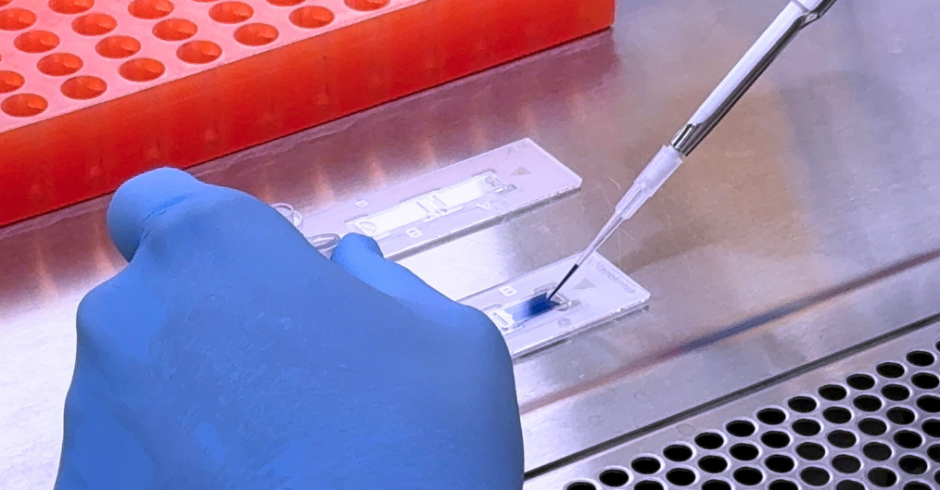
Both approaches can produce high-quality functional data. The right choice depends less on whether one format is inherently better and more on how the assay will be used. Transiently transfected reporter cells are often valuable when teams need speed, flexibility, and assay-ready convenience. Stable reporter cell lines become more valuable when programs require a renewable, defined cell source for repeated testing, internal assay ownership, or longer-term continuity.
In other words, transient and stable reporter systems should be viewed as complementary formats. Each can support reliable functional data when matched to the program stage, workflow requirements, and long-term testing needs.
When Transiently Transfected Reporter Cells Fit Best
Transient transfection allows reporter cells to be generated without integrating the receptor and reporter constructs into the host-cell genome. Because the introduced genetic material is present for a limited period of time, transient systems can often be developed and optimized more quickly than new stable clones.
This flexibility is especially useful during assay development and discovery-stage testing. Researchers can evaluate receptor constructs, reporter designs, host-cell backgrounds, transfection reagents, DNA concentrations, receptor-to-reporter ratios, and assay conditions before committing to a longer-term cell system. These variables can influence relative light units, background signal, fold activation or inhibition, EC50 or IC50 values, and overall assay window.
Transient transfection can also support evaluation of additional biological components when needed. For example, vectors encoding a co-activator, co-repressor, co-receptor, transporter, or other accessory protein can be incorporated into the transfection strategy and evaluated for their effect on functional assay performance. This can be useful when developing or optimizing assays for emerging targets or complex receptor biology.
Once optimized conditions have been identified, the same transfection process can be standardized for larger-scale cell production. Rather than requiring researchers to transfect cells immediately before every experiment, optimized transiently transfected cells can be manufactured in large batches, cryopreserved, and supplied as assay-ready cells.
For this reason, transiently transfected reporter cells are often a strong fit for early-stage assay development, functional screening, efficacy testing, potency assessment, selectivity profiling, and programs that require speed and flexibility.
When Stable Reporter Cell Lines Fit Best
Stable reporter cell lines are generated by introducing vectors that drive expression of a target receptor and a luciferase reporter gene functionally linked to receptor-responsive genetic elements. Following transduction, cells are cultured under selective pressure so that cells containing integrated copies of the introduced genetic material can be isolated and expanded.
Developing a stable reporter cell line typically requires the characterization of the stable pool, followed by the isolation, screening, and characterization of individual clones. Candidate clones may be evaluated for receptor expression, basal reporter activity, reporter responsiveness following receptor modulation, potency, signal-to-background ratio, and overall assay performance. Once a suitable clone is identified, expanded, and banked, it can provide a renewable reporter system for longer-term use.
This renewable cell source is the primary advantage of stable reporter cell lines. Because cells can be expanded and banked, laboratories can establish master and working cell banks and maintain access to a defined reporter system over time. This can be especially valuable for programs where continuity, internal assay ownership, and repeated testing are important.
Stable reporter cell lines are often a strong fit for long-term assay continuity, QA/QC workflows, CMC testing, lot-release support, potency testing, recurring internal assay operations, and programs that require a renewable, defined cell source.
Stable reporter cell lines still require appropriate cell banking, passage control, culture conditions, and performance monitoring. These practices help maintain assay consistency by controlling how cells are expanded, stored, qualified, and used over time. For programs that depend on repeated use of the same assay system, that structure can be an advantage because it supports a more controlled long-term testing workflow.
Choosing the Right Reporter Assay Format
The right reporter assay format depends on the stage and goals of the program. Transiently transfected reporter cells are well suited for early discovery, assay development, screening, efficacy, potency, and selectivity testing because they offer speed and flexibility during assay optimization. Stable reporter cell lines can be a strong fit for longer-term applications such as QA/QC, CMC, potency testing, and lot-release support, where a characterized and renewable cell source is valuable.
The two approaches can also be complementary. Transient assays can support early functional testing and assay optimization, while stable cell lines can provide continuity as programs advance into longer-term, standardized testing.
Regardless of format, reproducibility depends on rigorous process control. Stable cell lines require controlled cell banking, passage management, culture conditions, and performance monitoring. Transient reporter cells require standardized transfection, manufacturing, cryopreservation, and quality-control procedures. In both cases, consistency comes from how carefully the biological material is developed, characterized, stored, and used.
INDIGO’s Approach to Luciferase Reporter Cell Assays
INDIGO Biosciences supports both assay-ready transient reporter systems and stable reporter cell lines so researchers can select the format that best fits their program stage and workflow needs.
INDIGO’s assay kits use highly optimized, cryopreserved reporter cells designed for convenient functional testing. During assay development, INDIGO evaluates key transfection and assay variables so that receptor expression, reporter response, potency, background signal, and assay window are optimized before the assay reaches the customer. Standardized manufacturing and quality-control procedures are then used to support reproducibility across production lots.
For researchers who require a renewable reporter system for longer-term applications, INDIGO also offers stable reporter cell lines. These systems are well suited for programs that require sustained access to a defined assay platform for QA/QC, CMC, potency testing, or other recurring laboratory workflows.
By offering both formats, INDIGO helps researchers avoid a one-size-fits-all approach to reporter assay selection. Early-stage teams can prioritize speed, flexibility, and functional data generation, while later-stage teams can prioritize continuity, defined cell banking, and long-term assay control.
Transient and stable transfection should therefore be viewed as complementary tools, not competing options. When matched appropriately to the intended application, both approaches can provide reliable, reproducible functional data and help researchers move from early receptor characterization through long-term assay implementation.
Explore INDIGO’s luciferase reporter assay kits and stable reporter cell lines to identify the format that best supports your assay development, screening, potency testing, QA/QC, or long-term workflow needs.