Sub-Total: $0.00 USD

Have questions about this assay kit?
Human CHRM1 Inhibition Reporter Assay Kit
Product Description and Product Data
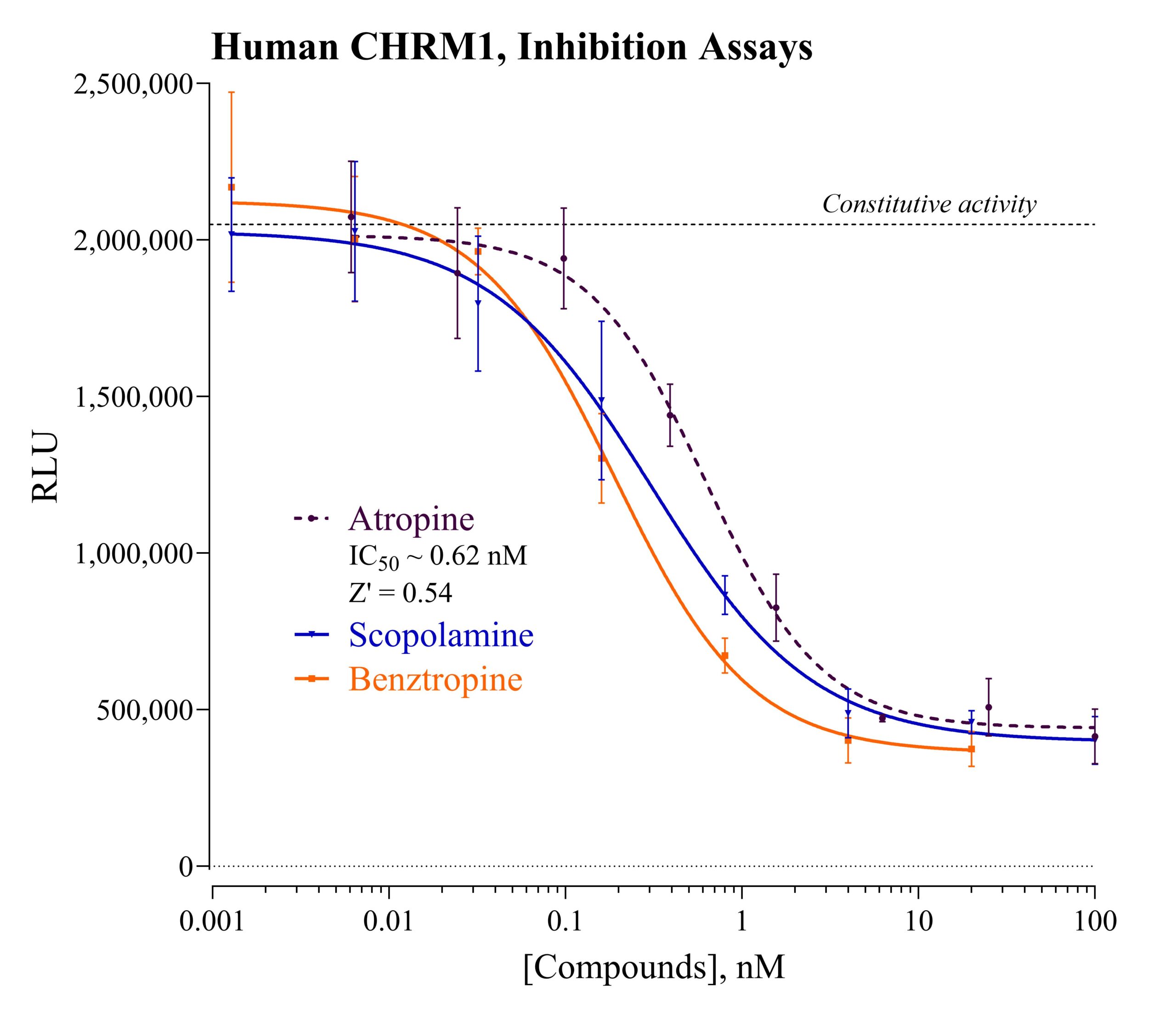
This is an all-inclusive cell-based luciferase reporter assay kit for the inhibition of Human Cholinergic Receptor, Muscarinic 1 (CHRM1). INDIGO’s CHRM1 reporter assay utilizes proprietary mammalian cells that have been engineered to provide constitutive expression of the CHRM1. In addition to CHRM1 Reporter Cells, this kit provides two optimized media for use during cell culture and in diluting the user’s test samples, a reference agonist, Luciferase Detection Reagent, and a cell culture-ready assay plate. The principal application of this assay is in the screening of test samples to quantify any functional activity, either agonist or antagonist, that they may exert against CHRM1. This kit provides researchers with clear, reproducible results, exceptional cell viability post-thaw, and consistent results lot to lot. Kits must be stored at -80C. Do not store in liquid nitrogen. Note: reporter cells cannot be refrozen or maintained in extended culture.
Features
Clear, Reproducible Results
- All-Inclusive Assay Systems
- Exceptional Cell Viability Post-Thaw
- Consistent Results Lot to Lot
Product Specifications
| Target Type | GPCR | ||
| Species | Human | ||
| Receptor Form | Hybrid | ||
| Assay Mode | Inhibition | ||
| Kit Components |
| ||
| Shelf Life | 6 months | ||
| Shipping Requirements | Dry Ice | ||
| Storage temperature | -80C |
Data
Target Background
Muscarinic acetylcholine receptors are members of the G-protein-coupled receptor (GPCR) superfamily that respond to the endogenous neurotransmitter acetylcholine. They are involved in a wide range of processes in the central and peripheral nervous system, which makes them of interest as drug targets for conditions including Alzheimer’s disease, schizophrenia, and drug addiction. The muscarinic acetylcholine receptor subfamily is composed of five subtypes, known as M1 – M5, and by their corresponding genes names (i.e., CHRM1 – CHRM5). However, targeting a specific subtype has proved challenging due to the high degree of homology of the orthosteric binding site for acetylcholine.
The CHRM1 subtype is expressed in the cerebral cortex and hippocampus regions of the brain, pointing to its key role in cognitive function. Targeting the less conserved allosteric binding sites of CHRM1 have resulted in the development of selective activators of this receptor enabling the specific targeting of the M1 subtype. These opportunities for novel drug development ensure that M1 remains a viable therapeutic target.
Product Documentation

Citations
Also available as a service