Sub-Total: $0.00 USD

Have questions about this assay kit?
Human DRD1 Reporter Assay Kit
Product Description and Product Data
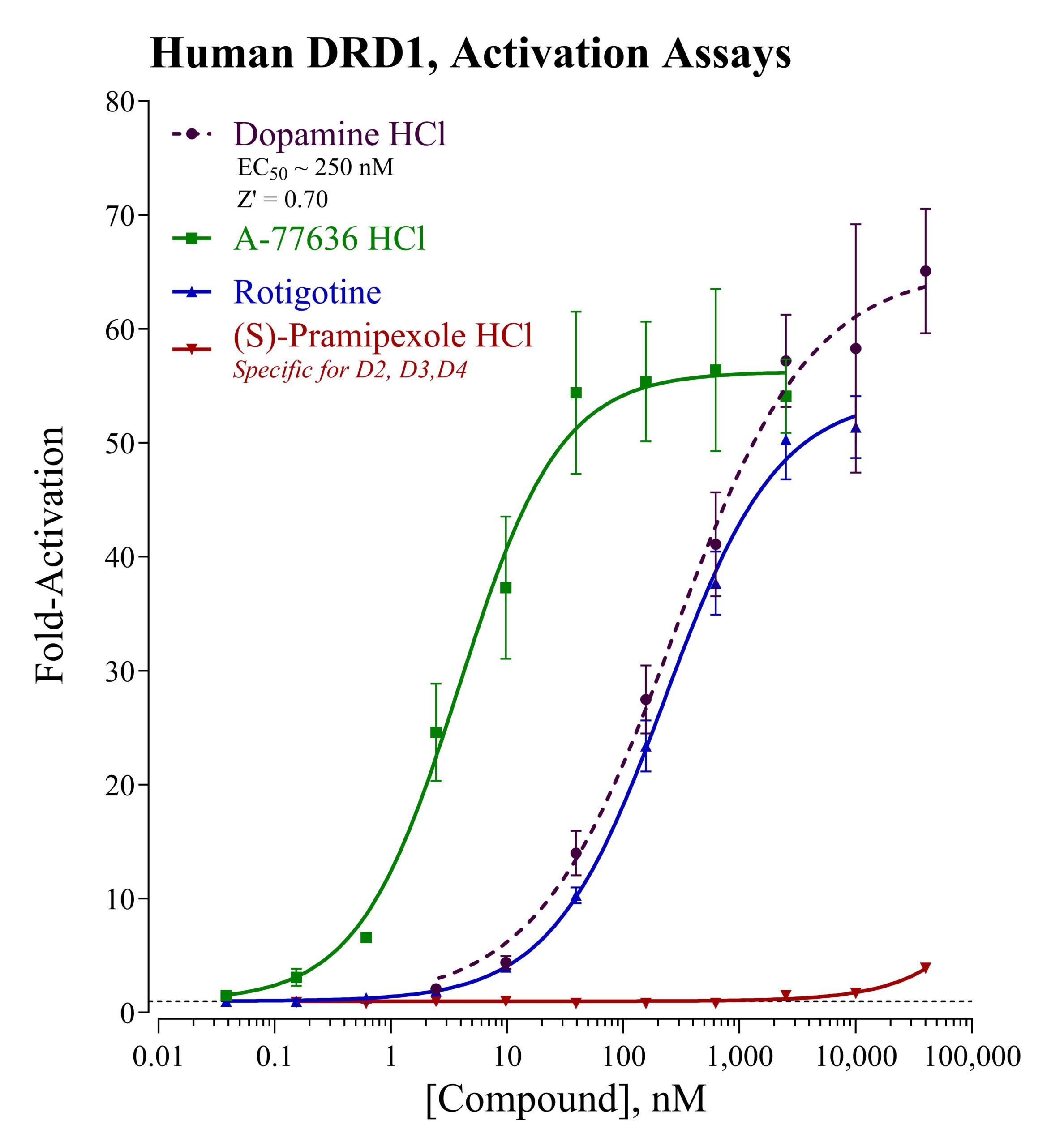
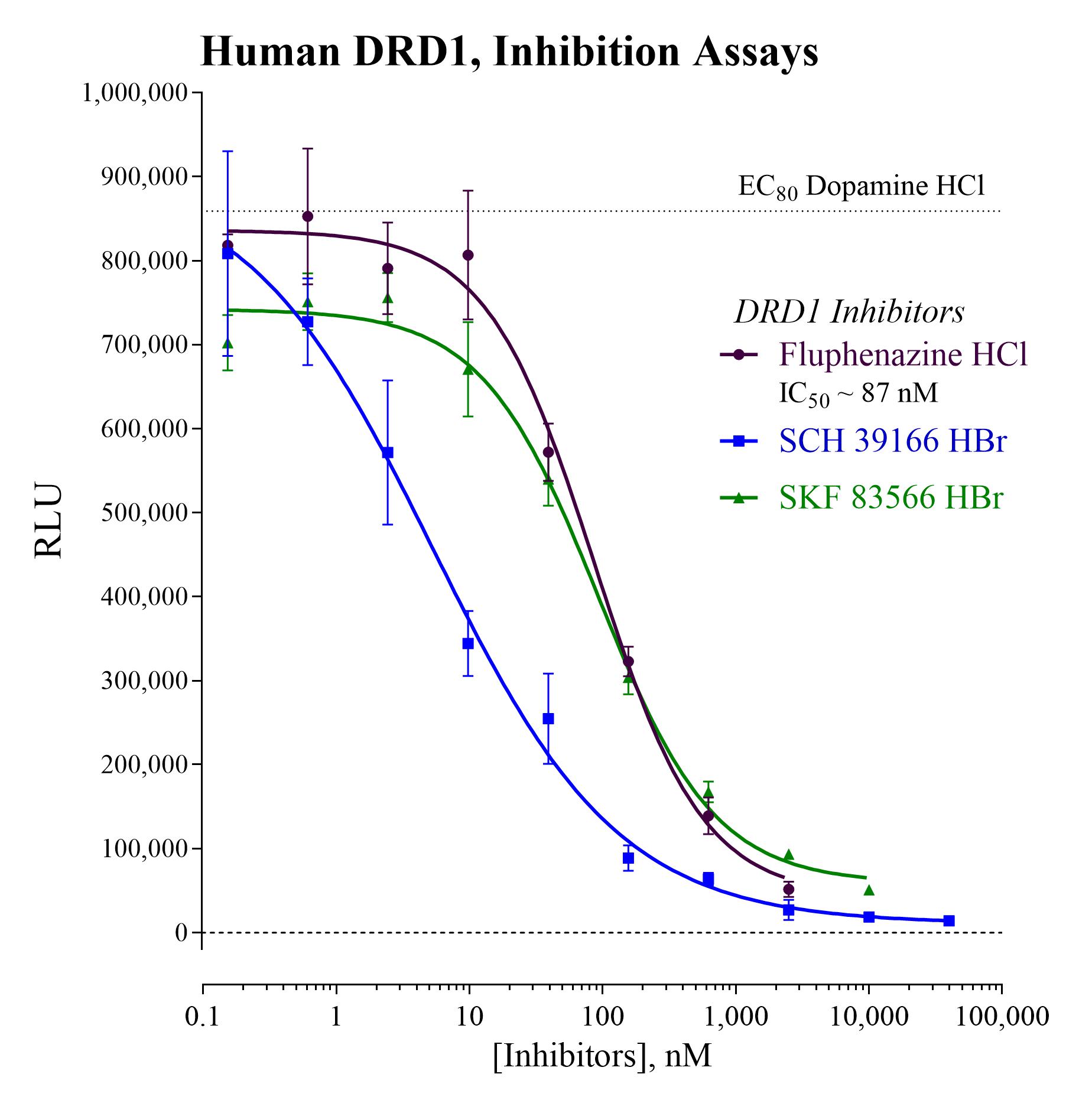
This is an all-inclusive cell-based luciferase reporter assay kit targeting the the Human Dopamine Receptor D1 (DRD1). INDIGO’s DRD1 reporter assay utilizes proprietary mammalian cells that have been engineered to provide constitutive expression of the DRD1. In addition to DRD1 Reporter Cells, this kit provides two optimized media for use during cell culture and in diluting the user’s test samples, a reference agonist, Luciferase Detection Reagent, and a cell culture-ready assay plate. The principal application of this assay is in the screening of test samples to quantify any functional activity, either agonist or antagonist, that they may exert against DRD1. This kit provides researchers with clear, reproducible results, exceptional cell viability post-thaw, and consistent results lot to lot. Kits must be stored at -80C. Do not store in liquid nitrogen. Note: reporter cells cannot be refrozen or maintained in extended culture.
Features
Clear, Reproducible Results
- All-Inclusive Assay Systems
- Exceptional Cell Viability Post-Thaw
- Consistent Results Lot to Lot
Product Specifications
| Target Type | GPCR | ||
| Species | Human | ||
| Receptor Form | Hybrid | ||
| Assay Mode | Agonist, Antagonist | ||
| Kit Components |
| ||
| Shelf Life | 6 months | ||
| Shipping Requirements | Dry Ice | ||
| Storage temperature | -80C |
Data
Target Background
This assay utilizes proprietary human cells that provide constitutive expression of the Human Dopamine Receptor D1 (DRD1).
Dopamine acts as an essential neurotransmitter whose signaling is conducted through five G protein-coupled receptors (GPCRs), dopamine D1 to D5 receptors (DRD1-DRD5). DRD1 primarily couples to the Gαs family of G proteins to activate adenylyl cyclase and induce cAMP production.
Dysregulation of DRD1 signaling has been directly linked to many neurological diseases, for example: Parkinson’s Disease (PD), Schizophrenia, drug abuse, autism spectrum disorder (ASD) and attention deficit / hyperactivity disorder (ADHD).
PD is considered a progressive neurodegenerative disorder with increasing worldwide prevalence, and its incidence steadily increases with age. Indeed, the global burden of this disease is estimated to be more than 12 million by 2040. Dopamine agonists have demonstrated efficacy for the treatment of PD but are limited by their adverse effects. However, selective activation of DRD1 and DRD5 have been explored in small, early-phase clinical trials with some success. Although, challenges exist with pharmacokinetics and bioavailability of these test compounds. Due to their involvement in many neurological ailments, DRD1 and related receptors continue to command considerable interest in therapeutics development and drug safety screening.

Citations
Also available as a service