Sub-Total: $0.00

Have questions about this assay kit?
Human MC2R Reporter Assay Kit
Product Description and Product Data
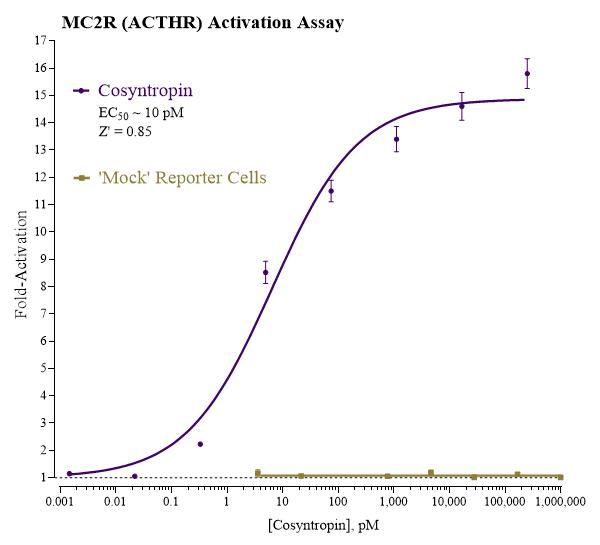
This is an all-inclusive cell-based luciferase reporter assay kit targeting the Human Melanocortin type 2 Receptor (MC2R, ACTHR). INDIGO’s MC2R reporter assay utilizes proprietary mammalian cells that have been engineered to provide constitutive expression of the MC2R. In addition to MC2R Reporter Cells, this kit provides two optimized media for use during cell culture and in diluting the user’s test samples, a reference agonist, Luciferase Detection Reagent, and a cell culture-ready assay plate. The principal application of this assay is in the screening of test samples to quantify any functional activity, either agonist or antagonist, that they may exert against MC2R. This kit provides researchers with clear, reproducible results, exceptional cell viability post-thaw, and consistent results lot to lot. Kits must be stored at -80C. Do not store in liquid nitrogen. Note: reporter cells cannot be refrozen or maintained in extended culture.
Features
Clear, Reproducible Results
- All-Inclusive Assay Systems
- Exceptional Cell Viability Post-Thaw
- Consistent Results Lot to Lot
Product Specifications
| Target Type | GPCR | ||
| Species | Human | ||
| Receptor Form | Hybrid | ||
| Assay Mode | Agonist, Antagonist | ||
| Kit Components |
| ||
| Shelf Life | 6 months | ||
| Shipping Requirements | Dry Ice | ||
| Storage temperature | -80C |
Data
Target Background
The melanocortin receptor system is important in the regulation of several physiological functions such as skin pigmentation, steroidogenesis, energy homeostasis, cardiovascular regulation, and inflammation. The melanocortin receptors are G-protein coupled receptors which bind in addition to adrenocorticotropic hormone (ACTH), one or more of the melanocortin stimulating hormones (α-MSH, β-MSH, or γ-MSH). These receptors have been targeted for drug development for the treatment of various skin disorders, skin cancer, obesity, inflammatory diseases and neurological disorders.
The melanocortin type 2 receptor (MC2R) is one of five members of the Melanocortin receptors (MCR). Unlike other types of MCR, MC2R, also known as the Adrenocorticotropin Hormone Receptor (ACTHR), exclusively binds ACTH and mediates its function in steroidogenesis and the release of cortisol. The melanocortin association protein (MRAP) is required for the transport of MC2R to the cell membrane and for binding ACTH and mediating its response. Familial glucocorticoid deficiency, Cushing’s syndrome and Addison disease are examples of diseases linked to mutations in MC2R or the accessory protein MRAP leading to imbalance in the blood levels of ACTH and cortisol. MC2R is predominantly expressed in the adrenal cortex, but can also be expressed in adipocytes, immune cells and kidneys.
Upon binding of ACTH, MC2R undergoes a conformational change that triggers the activation of stimulatory G (Gs) proteins via an exchange of GDP with GTP, followed by the activation of Protein kinase A and adenylate cyclase, and the production of the second messenger cAMP. Because of the significant role of MC2R in the regulation of cortisol and ACTH, there is an interest in developing therapeutics that modulate this receptor.
Product Documentation

Citations
Also available as a service