Sub-Total: $0.00 USD


Have questions about this assay kit?
Human PPARδ Reporter Assay Kit
Product Description and Product Data
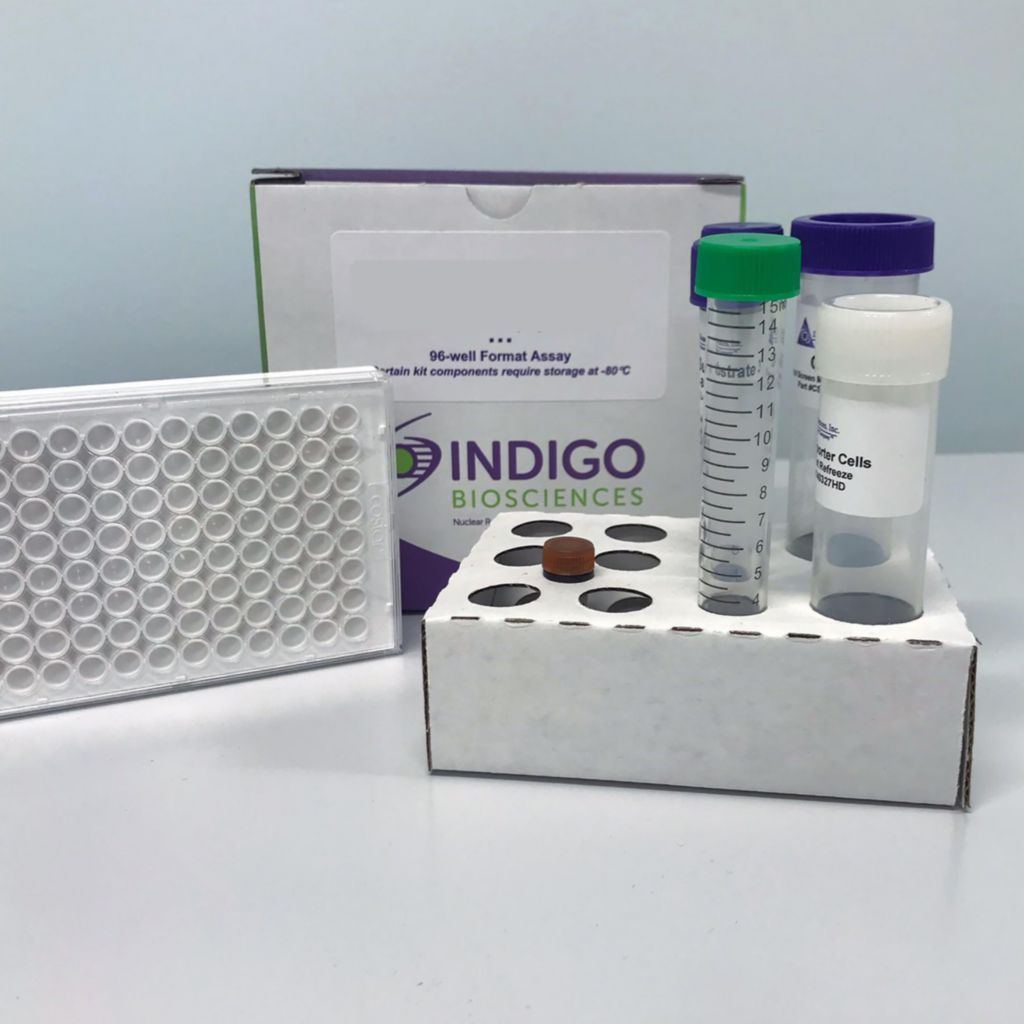
This is an all-inclusive cell-based luciferase reporter assay kit targeting the Human Peroxisome Proliferator-Activated Receptor Delta. INDIGO’s Human PPAR delta reporter assay utilizes proprietary mammalian cells that have been engineered to provide constitutive expression of the Human PPAR delta. In addition to PPAR delta Reporter Cells, this kit provides two optimized media for use during cell culture and in diluting the user’s test samples, a reference agonist, Luciferase Detection Reagent, and a cell culture-ready assay plate. The principal application of this assay is in the screening of test samples to quantify any functional activity, either agonist or antagonist, that they may exert against human PPAR delta. This kit provides researchers with clear, reproducible results, exceptional cell viability post-thaw, and consistent results lot to lot. Kits must be stored at -80C. Do not store in liquid nitrogen. Note: reporter cells cannot be refrozen or maintained in extended culture.
Features
Ready to Use Upon Receipt
- Includes All Needed Components
- Contains Transfected Reporter Cells
- Eliminates Cell Licensing Fees
- Clear, Reproducible Results
- Consistent Results Lot to Lot
Product Specifications
| Target Type | Nuclear Hormone Receptor | ||
| Species | Human | ||
| Receptor Form | Hybrid | ||
| Assay Mode | Agonist, Antagonist | ||
| Kit Components |
| ||
| Shelf Life | 6 months | ||
| Orthologs Available | Yes | ||
| Shipping Requirements | Dry Ice | ||
| Storage temperature | -80C |
Data

Target Background
Peroxisome proliferator-activated receptor delta (PPARδ or PPARβ), also known as NR1C2 is a nuclear receptor encoded by the PPARδ gene. This protein is a potential inhibitor of ligand-induced transcription activity of PPARα and PPARγ. It may function as an integrator of transcription repression and nuclear receptor signaling. The expression of PPARδ gene is found to be elevated in colorectal cancer cells. The elevated expression can be repressed by adenomatosis polyposis coli (APC), a tumor suppressor protein involved in the APC/beta-catenin signaling pathway. Knockout studies in mice suggested the role of PPARδ in myelination of the corpus callosum, epidermal cell proliferation, and glucose and lipid metabolism. PPARδ has been shown to be involved in differentiation, lipid accumulation, directional sensing, polarization, and migration in keratinocytes.
INDIGO’s PPARδ Reporter Assay Systems utilize proprietary mammalian cells engineered to express human PPARδ.
The principle application of this assay product is in the screening of test samples to quantify functional activities, either agonist or antagonist, that they may exert against the human peroxisome proliferator-activated receptor delta.

Citations
Also available as a service