Sub-Total: $0.00 USD


Have questions about this assay kit?
Human Nrf2 Reporter Assay Kit
Product Description and Product Data
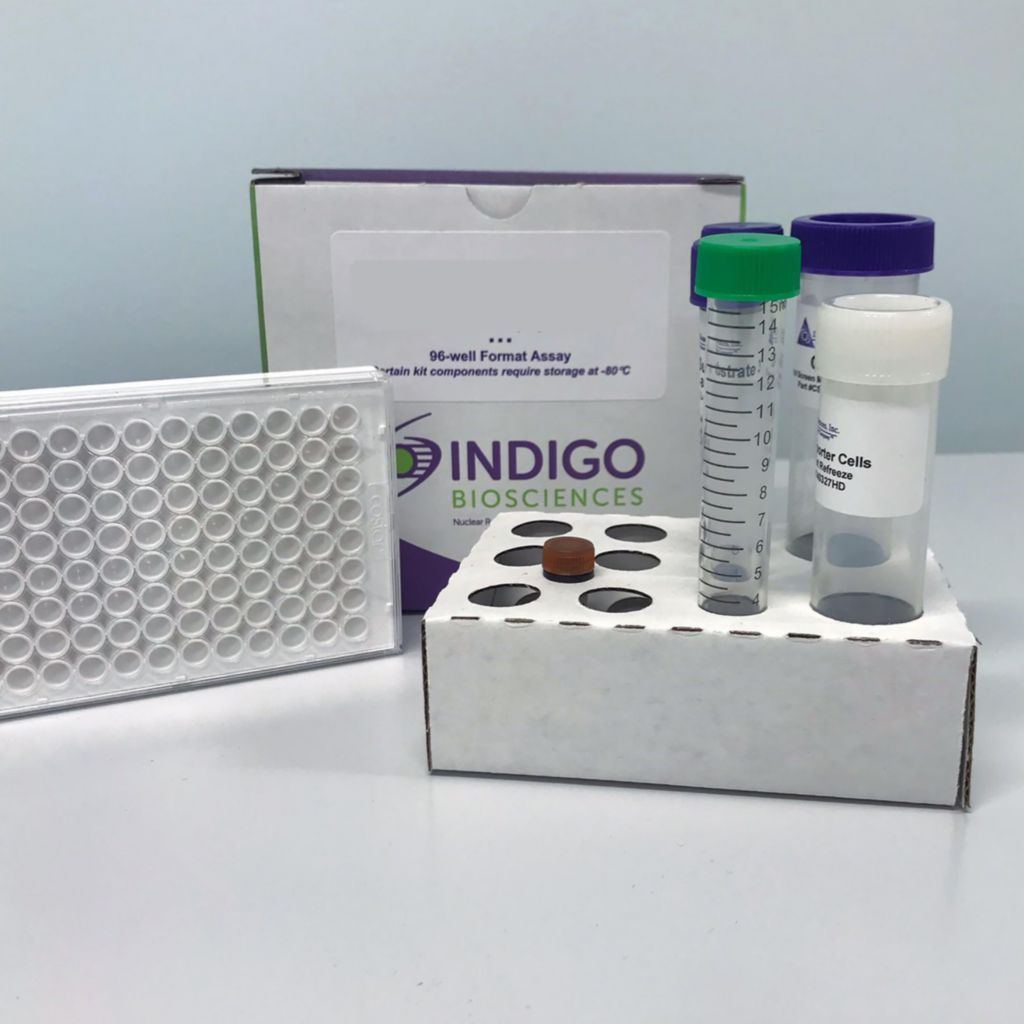
This is an all-inclusive cell-based luciferase reporter assay kit targeting the Human Nuclear Factor (erythroid-derived 2)-like 2 Receptor (Nrf2). INDIGO’s Nrf2 reporter assay utilizes proprietary mammalian cells that have been engineered to provide constitutive expression of Nrf2. In addition to Nrf2 Reporter Cells, this kit provides two optimized media for use during cell culture and in diluting the user’s test samples, a reference agonist, Luciferase Detection Reagent, and a cell culture-ready assay plate. The principal application of this assay is in the screening of test samples to quantify any functional activity, either agonist or antagonist, that they may exert against human Nrf2. This kit provides researchers with clear, reproducible results, exceptional cell viability post-thaw, and consistent results lot to lot. Kits must be stored at -80C. Do not store in liquid nitrogen. Note: reporter cells cannot be refrozen or maintained in extended culture.
Features
Clear, Reproducible Results
- All-Inclusive Assay Systems
- Exceptional Cell Viability Post-Thaw
- Consistent Results Lot to Lot
Product Specifications
| Target Type | Transcription Factor | ||
| Species | Human | ||
| Receptor Form | Native | ||
| Assay Mode | Agonist, Antagonist | ||
| Kit Components |
| ||
| Shelf Life | 6 months | ||
| Orthologs Available | No | ||
| Shipping Requirements | Dry Ice | ||
| Storage temperature | -80C |
Data
Target Background
Nrf2 is a ubiquitously expressed, basic leucine zipper transcription factor. It regulates the expression of a variety of genes encoding proteins that play critical roles in cyto-protection, as well as the detoxification and clearance of harmful endogenous and xenobiotic substances. In particular, Nrf2 regulates the expression of antioxidant proteins that confer cyto-protection against oxidative damage.
Under normal conditions Nrf2 resides in the cytoplasm bound to Keap1 and Cullin 3, and is the target of ubiquitination and rapid turn-over via proteasomal degradation. However, under conditions of cellular oxidative stress the tight association of Nrf2 with Keap1 and Cullin 3 is broken, effectively disrupting the otherwise efficient process of Nrf2 degradation. Once non-ubiquitinated Nrf2 accumulates in the cytoplasm it translocates into the nucleus, whereupon it forms hetero-dimers with Maf. In this configuration Nrf2 binds to antioxidant response element (ARE) sequences resident in the promoter regions of some genes, initiating transcription complex formation and gene expression.
INDIGO’s Human Nrf2 utilizes proprietary mammalian cells that include the luciferase reporter gene functionally linked to a promoter containing tandem antioxidant response elements (AREs) and engineered to provide constitutive, high-level expression of Human Nrf2.
The principal application of this reporter assay system is in the screening of test samples to quantify functional activity, either agonist or antagonist, that may exert against Human Nrf2.

Citations
Also available as a service